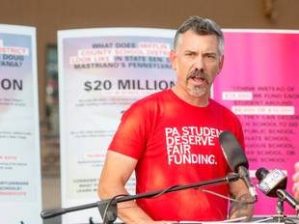
Over the last ten days, I’ve been in Aotearoa, New Zealand as part of a climate research, education, and capacity-building team from Penn State. It has been a joy to be here a second time and learn more about forests, fire, carbon, and biodiversity as well as Māori culture and practices, national and local government, dual governance, and climate planning and programming. Of course, none of my visit has happened in a vacuum. People were keen—if worried—to talk about the instability of the United States.
The people, land, waters, forests, infrastructure, and all of life in Aotearoa is touched by climate change. Coastal erosion from rising sea levels, record flooding events from cyclones and atmospheric rivers, and changing temperatures are touching endemic challenges in housing, water quality, biodiversity, poverty and health. Where Māori iwi are concerned, legacies of inequity can and do exacerbate challenges. Just as is true in the United States or any part of the world, people lower on the demographic and socioeconomic ladder often suffer and pay the most while having to pay attention to simply making ends meet. So for some, climate change might be hitting them, but it’s part of a larger challenge of simply pursuing a livelihood.

I walked landscapes hit by fires, those used for carbon trading, as well as largely indigenous forests. The fire scapes were laced with invasive species, like acacia trees from Australia. The carbon market forests are largely monocultures of Monterey Pine in Northland. The intact indigenous forests are breathtaking. Kauri trees are truly magical, capable of living to be over 1,000 years old. But much of this landscape has been degraded by human influence, mostly through agriculture. I asked my colleague, a landscape ecologist, at one point, “What do you see when you look at this landscape?” We were driving through a valley of farmland with some tree stands, drainage, lots of cows, uneven grass, and limited woodlands on some hills. “It’s beat up,” she said. It was green. But it was beat up.
We also got to meet people in Northland, in Auckland Regional Council, Waitakere, west Auckland, and west Auckland’s MP in Parliament to talk about climate planning. It was a great opportunity to connect with people who touch policy, planning, and budget in most scales of New Zealand’s government. Our amazing hosts, Dion and George, made this possible. There are far too many notes to make here, but I started to see how Tiriti o Waitangi (Treaty of Waitangi) is actualized in practice. Most importantly for me, I have started wrapping my head and heart around concepts and practices for Māori that have everything to do with connection and interrelatedness. As I have learned, colonial rule and its legacy have misconstrued, denied, and relegated Māori sovereignty (tino rangatiritanga) for most of New Zealand’s history as a colonized and now dually-governed (ideally) nation. I am fortunate to be working with people in Aotearoa who are welcoming, answer my and my colleagues’ questions, open their homes and communities, and help us to see the power of whakapapa. Such a welcome invites my own humility.
Projects may well be coming. One part of our team will continue exploring forests and forest carbon. We will be trying to do projects in resilient community spaces (Marae) with partners in Northland. Another set of projects in Waitakere and West Auckland looks like it could help with greenhouse gas accounting, mitigation planning through solar, parks, and schools. Nothing is set in stone, but there are certainly possibilities.
On our last day, my wife Hilary and I went to the Auckland Art Gallery and the Auckland Maritime Museum. Both had exhibitions that featured meeting glaciers and the cleavage of coastal Antarctica. They were powerful and frightening, showing us the fragile moment we are in.

All of our colleagues and contacts here are worried about the United States. Some of them made jokes. Some asked with trepidation. The MP we met with, who had lived and worked in the United States in the late ‘90s and early ‘00s said, “Please come back America.” It was a somber note. Once said, we got to work. It was the right thing to do. It will always be the right thing to do.
Last year when I was returning home to Penn State from my first trip to Aotearoa, I vowed I would make it count. I’m trying to make it count for people, the places they love, and this world we cherish and owe our very lives to.
 Peter Walks for Democracy
How sad to see how our neglect of caring for the planet is affecting a people who have always cared for the planet, Peter. May our Higher Power forgive us, and help us to do better in the future. On a positive note, I just read the electricity prices are expected to spike in this coming year. I’m glad we got the solar power purchase agreement through, and it is just in the nick of time. Too bad we couldn’t have done it a year or two earlier, but at least it got done. At least we can feel satisfied that we did what we could, where we could, with what we had, as President TR advised – Where is he when we need him??
“Do not be daunted by the enormity of the world’s grief. Do justice now. Love mercy now. Walk humbly now. You are not obligated to complete the work but neither are you free to abandon it.” The Talmud
LikeLike